Gutter Guards
Micro-mesh protection that keeps cottonwood fluff, needles, and leaves out.
See the serviceGutters & Drainage
Mountain winters hit harder: deeper snow, colder eaves, and melt-freeze cycles that back water behind your shingles. We install heat cable and hot-edge systems where high-country roofs actually fail — eaves, valleys, gutters, and downspouts — so water has a path out.
The service
Colorado mountain and foothill homes face a tougher ice-dam cycle than the metro: heavy snow loads at elevation, sunny afternoons that melt the roof, then bitter nights that refreeze meltwater at the cold eave. That shelf of ice blocks drainage — and pooling water doesn't run off; it sits against underlayment and finds its way inside. We serve mountain communities within our ~100-mile Denver service area — Evergreen, Idaho Springs, Golden foothills, Summit County (Breckenridge, Frisco, Dillon, Silverthorne), Vail Valley, and the high-country towns along I-70 and US-285.
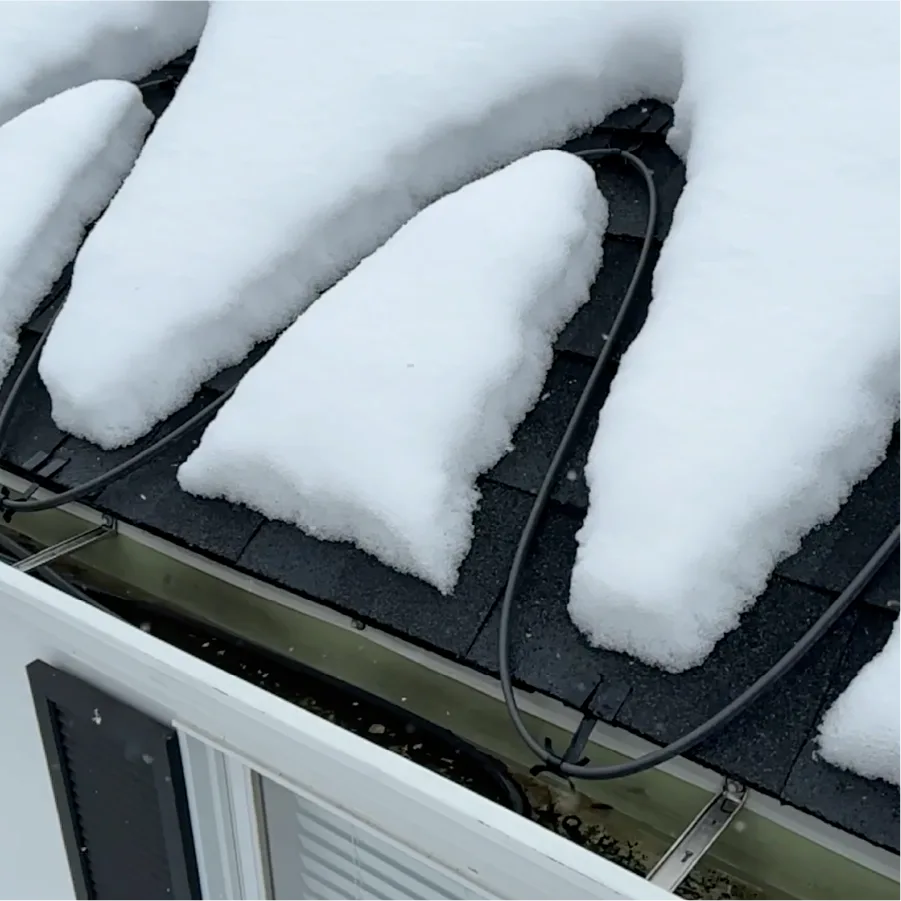
Peak Elevation installs self-regulating heat cable and hot-edge gutter de-icing systems sized and routed for your roof geometry — not a generic zigzag from a big-box spool. Hot edge is the industry term for heated roof-edge and gutter-trough systems that keep melt channels open at the eave; we map problem zones (north faces, valleys, low-slope sections, gutter outlets), fasten with roof-appropriate clips, and wire controllers so the cable runs when it needs to and draws less power when it doesn't.
Colorado note
At elevation, north eaves stay cold longer, valleys carry more runoff, and gutter outlets freeze shut while the rest of the roof still looks fine. Heat cable and hot-edge gutter de-icing are the targeted fix for those persistent zones — not a substitute for balanced soffit intake and ridge exhaust, which we install too. We'll tell you honestly when ventilation is the real answer and when a hot-edge heat cable system belongs in the plan for your mountain home.
Roof de-icing
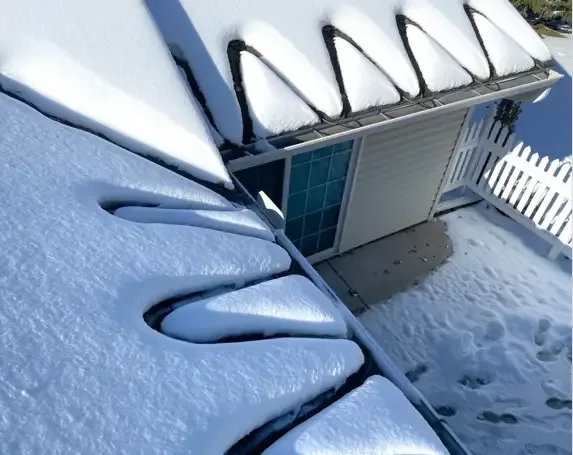
The right system creates melt channels at the spots Colorado mountain roofs actually fail — cold north eaves, congested valleys, and frozen gutter outlets at elevation — so water exits before it pools against your underlayment.
Self-regulating cable along the roof edge keeps meltwater moving through snow and ice instead of refreezing into a solid dam. Open channels at several points along the eave mean water reaches the gutter instead of backing up under shingles.
Valleys concentrate two roof planes into one drainage path — and they freeze first on north-facing runs. We route cable through valleys and around dormers where ice builds before the rest of the roof shows trouble.
A heated eave doesn't help if the gutter or downspout is a block of ice. Hot-edge routing runs self-regulating cable inside troughs and down spouts so the whole path stays open from roof surface to grade discharge.
Self-regulating cable draws more power when it's colder and less when it's warmer — locally, inch by inch. That beats old constant-wattage tape that runs full bore all season and spools your electric bill.
Asphalt shingle, standing-seam metal, and tile each need a different fastening approach. We use manufacturer clips that hold the cable off the surface without piercing the weather barrier — no ad-hoc staples through your shingles.
Scope
Choices
Heat cable along problem eave runs and hot-edge de-icing inside gutter troughs — the right fix when ice dams form at the roof edge but valleys stay clear.
Cable routed through valleys, around penetrations, and along the full eave line — for homes that ice up across multiple planes every winter.
Thermostatic switch or moisture sensor so the system energizes only when conditions demand it — lower energy draw over a long Colorado mountain winter.
How we work
Good questions
Hot edge is the industry term for heated roof-edge and gutter-trough systems that keep melt channels open at the eave. Heat cable is the product we run to create that hot edge — along the roof edge, inside gutter troughs, and down downspouts. Homeowners often say heat tape or heat cable; we install self-regulating cable routed for your roof, not old constant-wattage tape from a big-box spool.
Homeowners use the terms interchangeably. Both describe an electric heating element run along the roof edge, in gutters, or down downspouts to melt ice and keep water moving. We install self-regulating cable — the kind that adjusts heat output as temperature changes — not old constant-wattage tape that runs full power whenever it's plugged in.
Properly routed cable prevents ice from forming a continuous dam by keeping drainage channels open through snow and ice. It doesn't stop snow from accumulating — but when meltwater can reach the gutter and downspout, the ice shelf never builds the pool that leaks into your home. For homes with chronic attic heat loss, we'll also flag ventilation fixes.
Yes — within our ~100-mile service radius from Denver. That includes Evergreen, Idaho Springs, Golden foothills, Summit County communities, and many I-70 and US-285 mountain towns. Roof pitch, snow load, and exposure differ at elevation; we walk your roof and size the system for your site, not a metro template.
Cost depends on linear footage, roof complexity, controller type, and how many valleys and downspouts need coverage. Mountain homes often need longer eave runs and more valley routing than metro roofs. Rather than quote a misleading per-foot average, we walk the roof, measure the runs that actually need heat, and give you a written line-item price. Estimates are always free.
Yes — if the gutters are sound. We install cable inside troughs and downspouts with hangers and guards that won't crush the line. If your gutters are failing or undersized, we'll tell you before we heat a system that can't drain — sometimes gutter replacement and cable together is the honest scope.
Pairs well with
Micro-mesh protection that keeps cottonwood fluff, needles, and leaves out.
See the serviceExtensions and drainage that move roof water well away from your foundation.
See the serviceVented soffit that breathes right — helping prevent ice dams and moisture.
See the serviceThe board your gutters hang on — replaced solid, wrapped, and sealed.
See the serviceFree estimates · No pressure
Free on-site walk-through, a written line-item quote, and honest advice — even when the honest advice is a smaller job.